
What's going on, and why we're not backing down
In March 2026, NIH filed a unit clarification petition arguing that Fellows are not employees and should not have the right to a voice in our working conditions. If NIH prevails, the number of Fellows eligible for union rights would effectively fall to zero. Fellows and management had our hearing in front of the FLRA, and the transcript is now public. Now we're waiting on a ruling. Here's the full picture: what NIH said, what came before it, and why this fight matters for the people and careers that make biomedical research possible.
How we got here
Fellows have been organizing and voting overwhelmingly in support of our workplace rights. Workers showed up for multiple collective actions to secure contract protections, and now NIH management wants to go back on the same contract that they agreed to and workers ratified.
Fellows vote to form a union
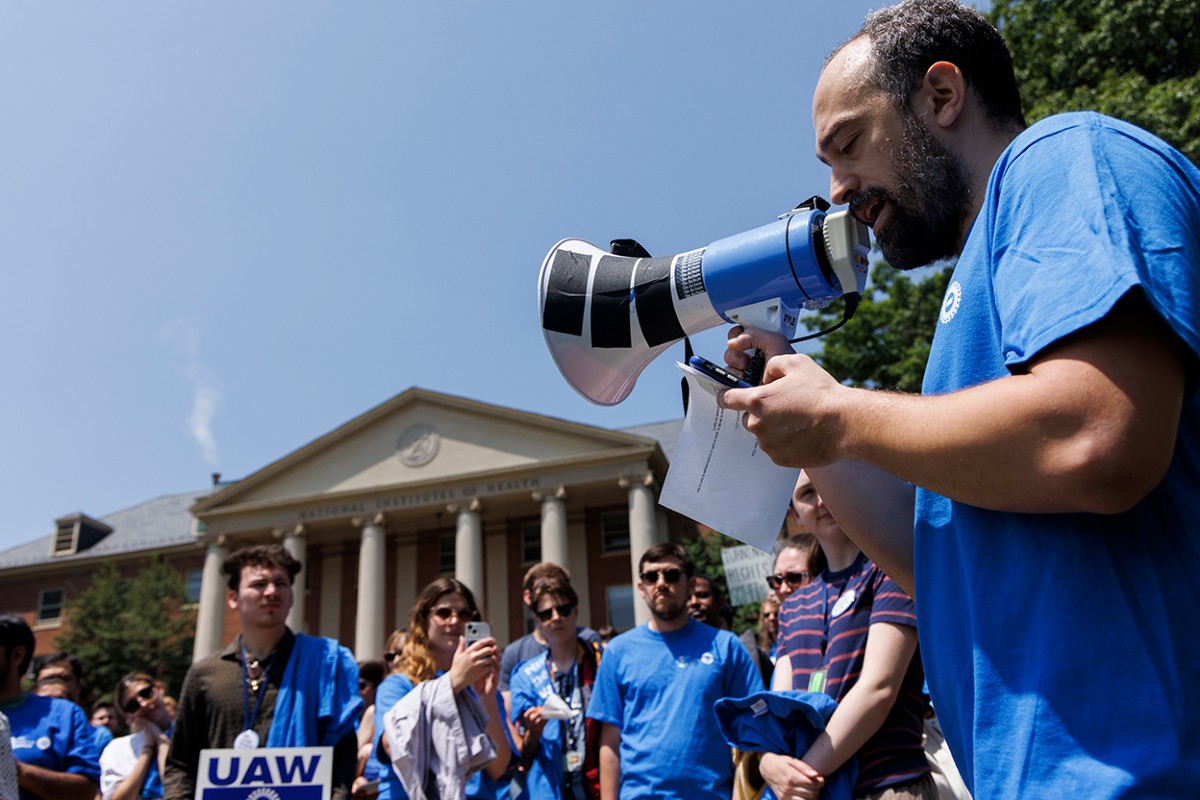
NIH Fellows voted overwhelmingly for union representation. The Federal Labor Relations Authority certified the bargaining unit in December 2023, covering roughly 5,000 Fellows. 01
Fellows win a first contract
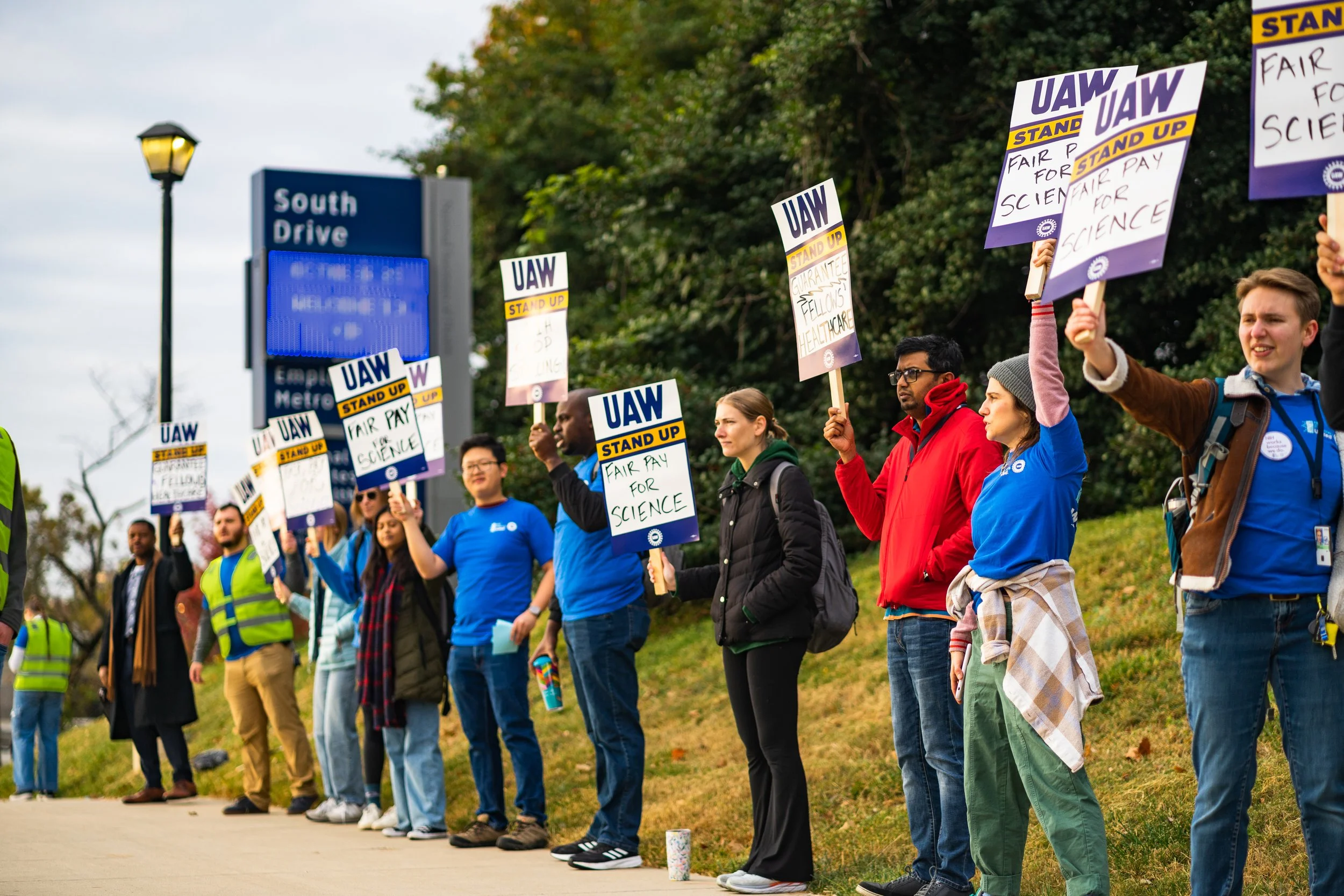
Our contract established enforceable gains on pay; a 50% increase in leave time; real health, safety, and harassment protections; protections for workloads immigration needs; and a grievance process with neutral arbitration. 02 03
The broader research environment shifts
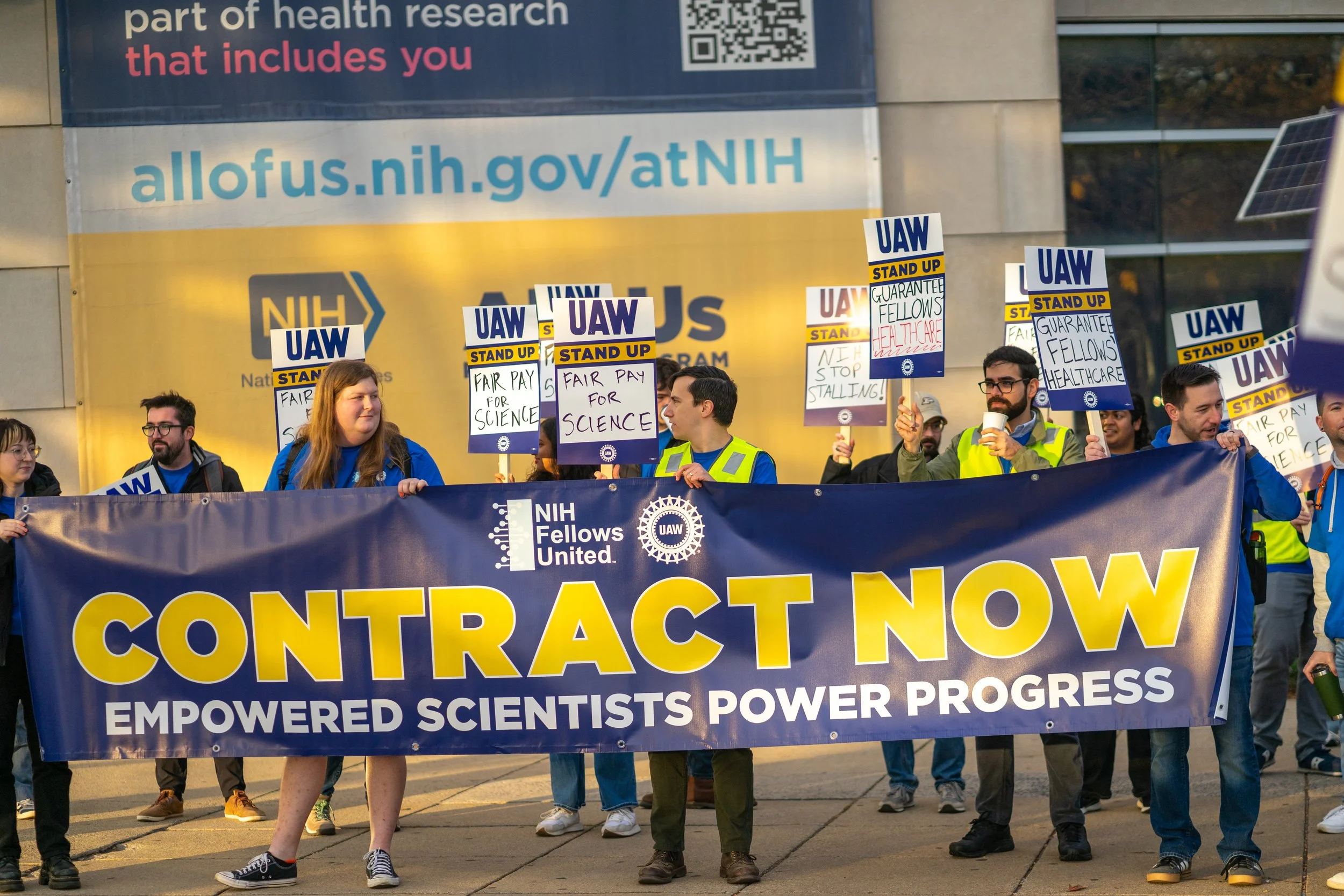
A broad attack on science, including mass firings of federal workers and threats to cut federal science funding, put research in the forefront of public attention. Amidst these attacks, NIH attempted to sharply limit indirect-cost reimbursement that supports core university and research operations. A federal court later blocked the policy. 04
NIH files a unit clarification petition
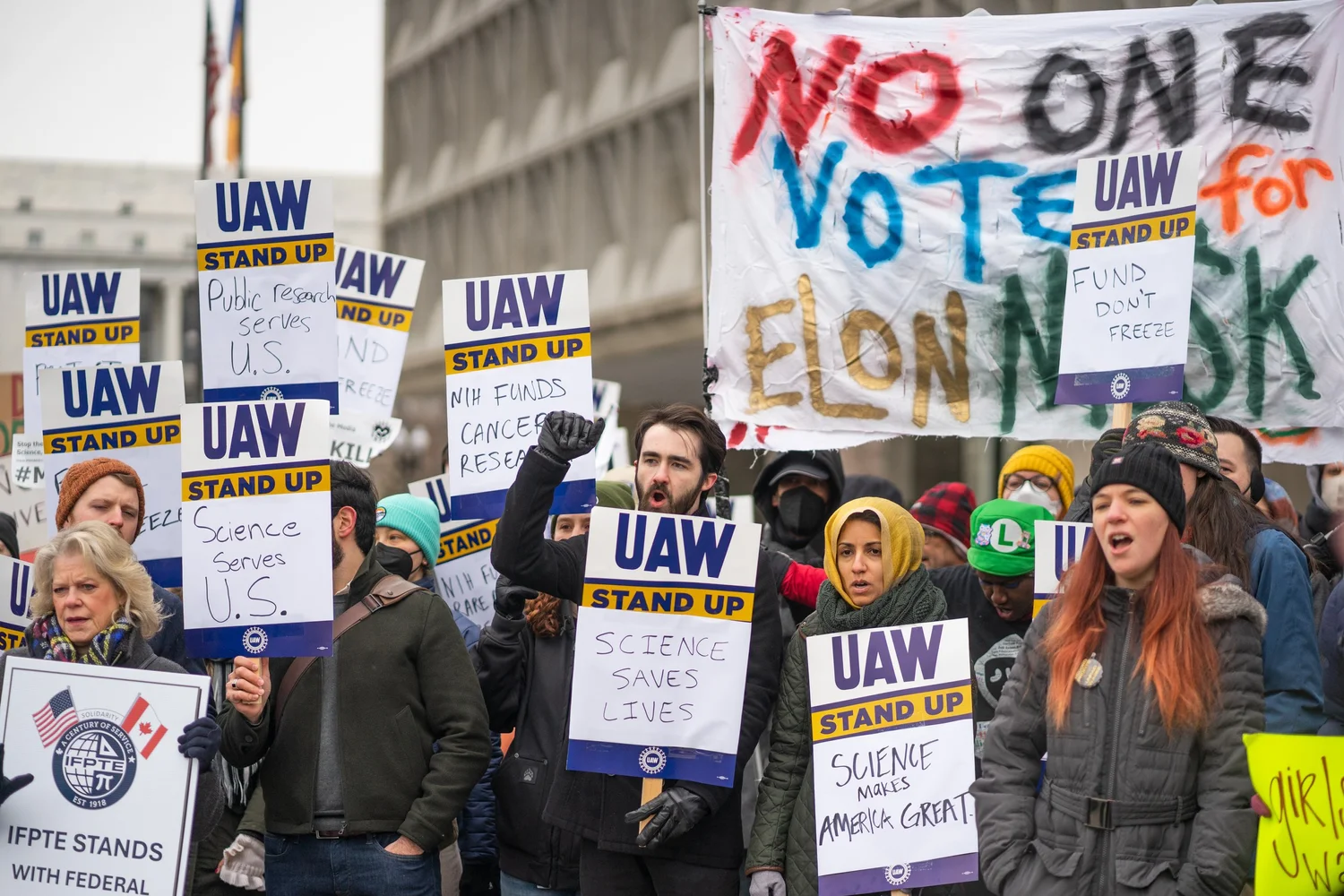
In an email sent to our union's elected local president, NIH said the bargaining unit “should never have been certified” and filed a unit clarification petition arguing that Fellows are trainees rather than employees. If NIH prevails, all Fellows would be removed from the bargaining unit despite having a collective bargaining agreement agreed to by both parties set to run through 2027. 05 06 12
“The NIH/UAW bargaining unit should never have been certified.”
Hearing held, decision pending
Fellows have made our case. The regional FLRA decision is pending. In the meantime, Fellows are continuing to organize, enforce our rights, and act collectively around the conditions of our work.
What does the research show about unions?
NIH Fellows are part of a crucial movement to organize researchers across the country. Workers across higher education and biomedical science are joining this growing movement and learning what collective bargaining can mean for the people trying to build sustainable careers in research.
Pay, benefits, mentoring, immigration status, workplace protections, and career stability shape who can remain in biomedical research and under what conditions. Unionization gives early-career researchers a collective way to bargain over conditions that affect our work rather than navigating them alone.
Unionized graduate and academic workers have used collective bargaining to raise compensation and improve working conditions.
The biomedical research enterprise has long struggled with whether research careers are financially sustainable, predictable, and accessible to people from different backgrounds, especially in early career stages.
Research on international postdocs documents gaps in pay, benefits, and mentoring, while immigration status can add another layer of dependence and uncertainty to an already contingent career stage.
Underrepresented researchers face unequal pathways through biomedical science, including differences in career intentions and persistence, making working and training conditions part of the question of who gets to build a research career.
What we've already won
Fellows organized, bargained, took action, and overwhelmingly ratified these protections in our first contract.
Guaranteed annual pay increases and a commitment to standardize pay across NIH Institutes for FTE Fellows
Enforceable protections against harassment, discrimination, and abusive conduct
Guaranteed paid parental leave and a 50% increase in protected time off
Enforceable health and safety standards and workload protections
Expanded immigration-related protections for Visiting Fellows
A fair grievance process with access to neutral arbitration
See the complete summary at uaw2750.org/what-we-won ↗ 02
What we can do when we act together
See some examples of what happens when we connect our local with tens of thousands of other UAW research and higher education workers. We can take on fights that no individual Fellow, lab, or workplace could carry alone. 13
People made the fight for public research national
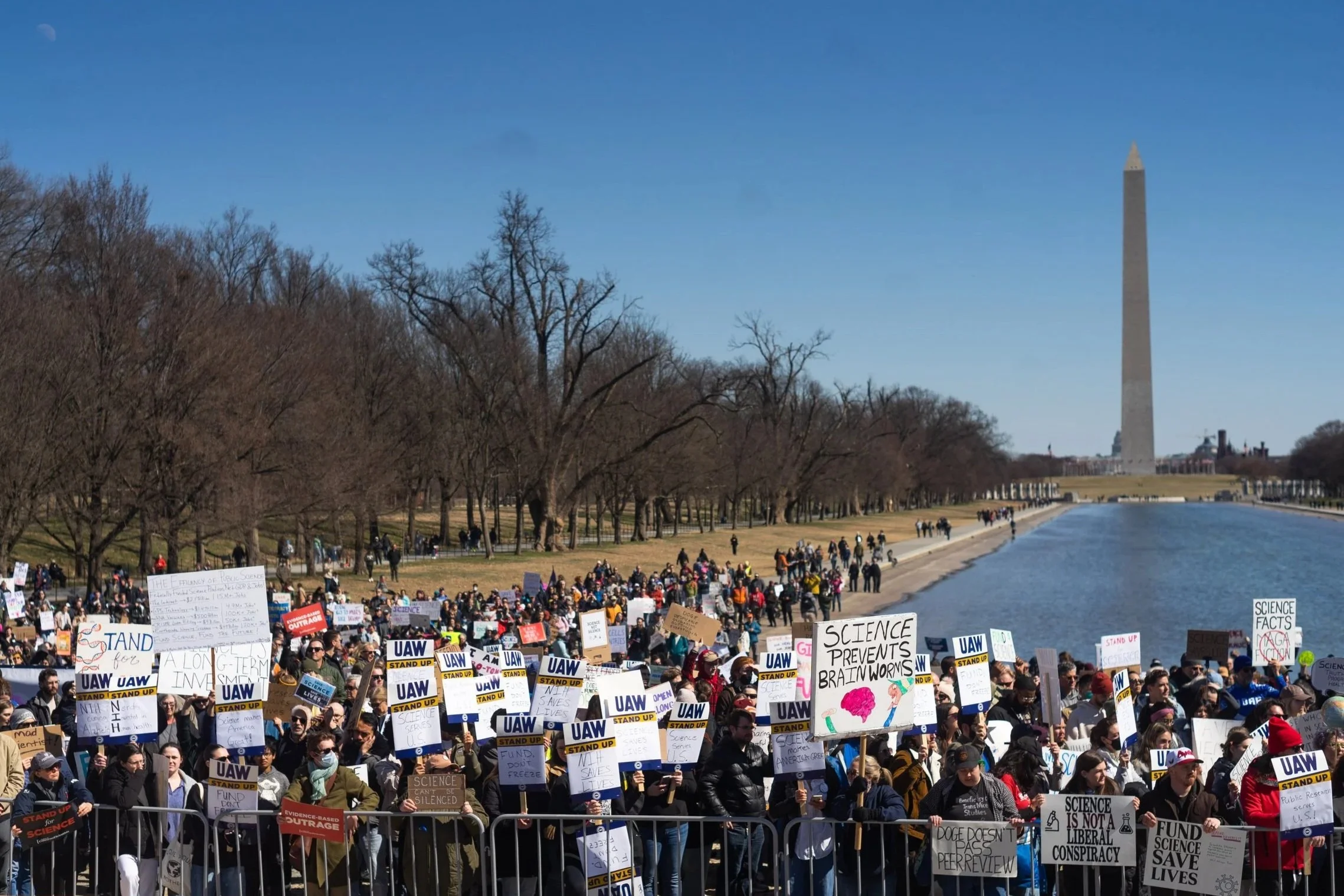
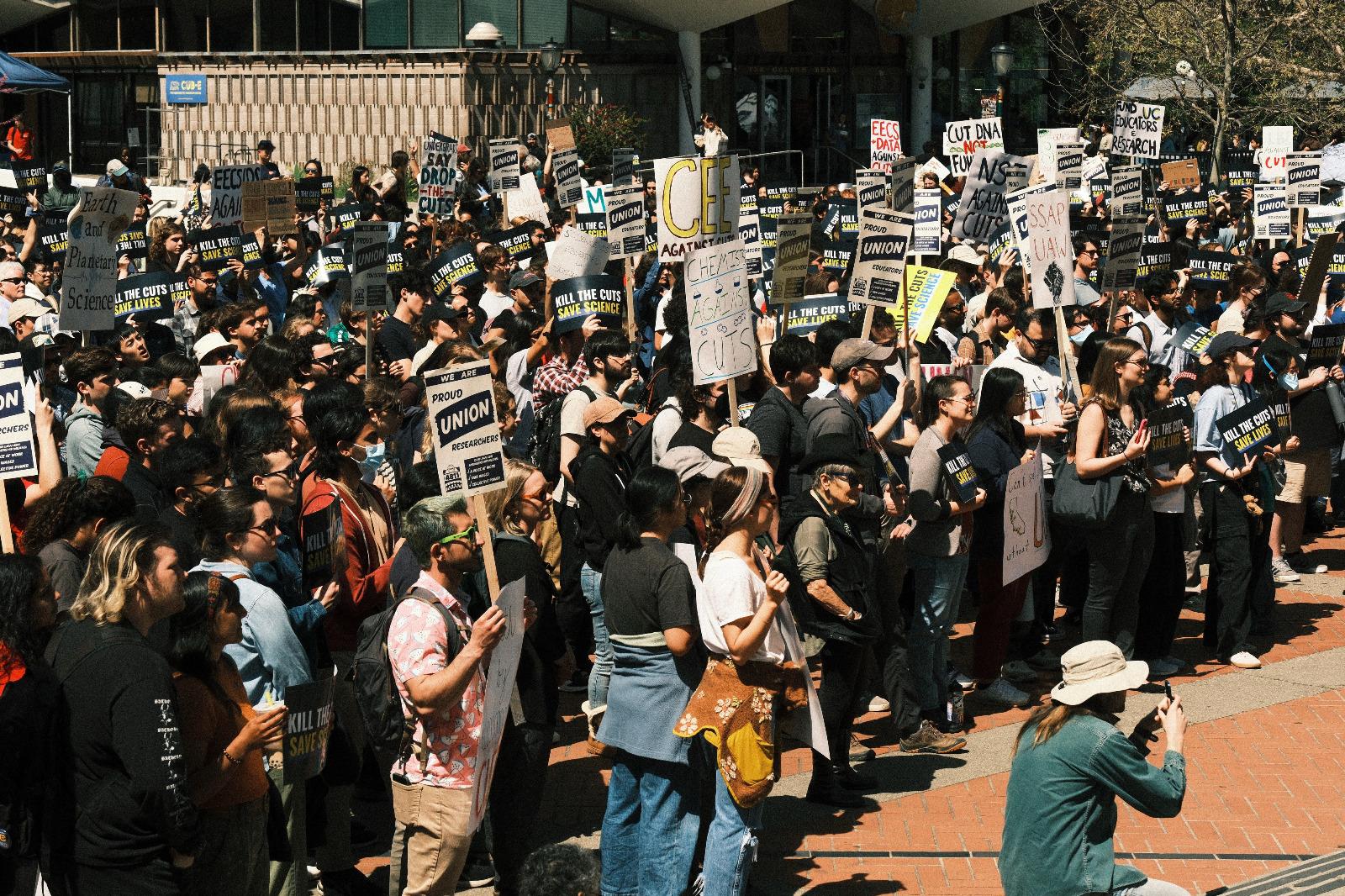
When research funding came under attack, UAW members and allies organized rallies, phone banks, congressional visits, town halls, teach-ins, science events, and coordinated days of action. Here at Local 2750, Fellows rallied outside HHS, spoke at Stand Up for Science, organized for Kill the Cuts, held science-funding town halls, and brought the case for NIH funding directly to lawmakers. 18
Legal action is one tool we can use together
Thousands of members pooling resources means workers can help sustain cases that would be impossible for one Fellow to take on alone. When members keep organizing publicly and politically outside the courtroom, we make real change both legally and in action.
- Terminated NIH grants: UAW was a plaintiff in the federal challenge to NIH directives that canceled research based on disfavored topics. In June 2025, a federal judge ordered hundreds of terminated NIH grants restored. 14
- Thousands of stalled NIH applications: A later agreement covered roughly 5,400 NIH applications that had been frozen, denied, or withdrawn. By January 2026, NIH had issued decisions on about 700 of them and nearly 90% were approved. 15
- Harvard research funding: UAW and AAUP were plaintiffs in the first lawsuit challenging the administration's cancellation of billions in Harvard grants. A federal judge later ruled the $2.2 billion cancellation unconstitutional. 16
- NIH indirect costs: UAW backed the states' challenge to the proposed 15% indirect-cost cap and later filed an appellate brief describing the threat to research jobs, labs, clinical trials, and public health. The policy remains blocked. 04 17
We can make sure international workers do not face these fights alone
For researchers on visas, a workplace problem can quickly become an immigration problem too. Acting together lets members share the cost and risk of responding. We can maintain legal resources, spread reliable information quickly, organize coworkers around someone who is being targeted, challenge harmful policies, and bring public pressure when an individual worker would otherwise be isolated. 11
- Direct support: UAW maintains an immigration legal hotline, know-your-rights resources, attorney-led webinars, and referrals for members facing immigration emergencies.
- H-1B fee challenge: International UAW and UAW Local 4811 joined a federal lawsuit challenging the administration's $100,000 H-1B employer fee, a policy with direct consequences for postdocs, researchers, nurses, and other workers. 19
- The “Gold Card” program: UAW joined a federal lawsuit challenging the administration's $1 million Gold Card program. That case is ongoing. 11
- Visa status and protected speech: UAW members and allies have organized around SEVIS revocations and other immigration actions while legal challenges moved forward. UAW's Higher Education Department reports that the administration reversed SEVIS revocations after lawsuits and nationwide action by UAW members and others. 11
Sources
Resources, research, and union materials are linked below.
Photo credits
Hero: Melissa Lyttle for Nature, from Max Kozlov, “Thousands of early-career NIH researchers forming union for first time,” 1 June 2023. View source ↗
You have power in your union
Every Fellow in the bargaining unit is covered by the contract. Membership is how you get a vote, on leadership, on union decisions, and on what we fight for next.