

A coworker in every lab
Organizing Committee
A strong union is one where every Fellow knows someone they can talk to. We are building a network of coworkers across NIH who keep their labs informed, notice when someone needs support, and help us act together when it matters.
Join or visit a meetingWhat this committee really is
The people who keep our union connected
At its simplest, the Organizing Committee is a group of Fellows making sure our union reaches beyond inboxes and meetings. We want every lab to have a familiar face—a coworker people already know and regularly talk with—who can share what is happening, listen to concerns, and connect people with help.
No one is expected to know every answer. Committee members support one another, compare notes, and learn together. The point is not to be an expert. It is to make sure nobody is left disconnected or has to face a workplace problem alone.
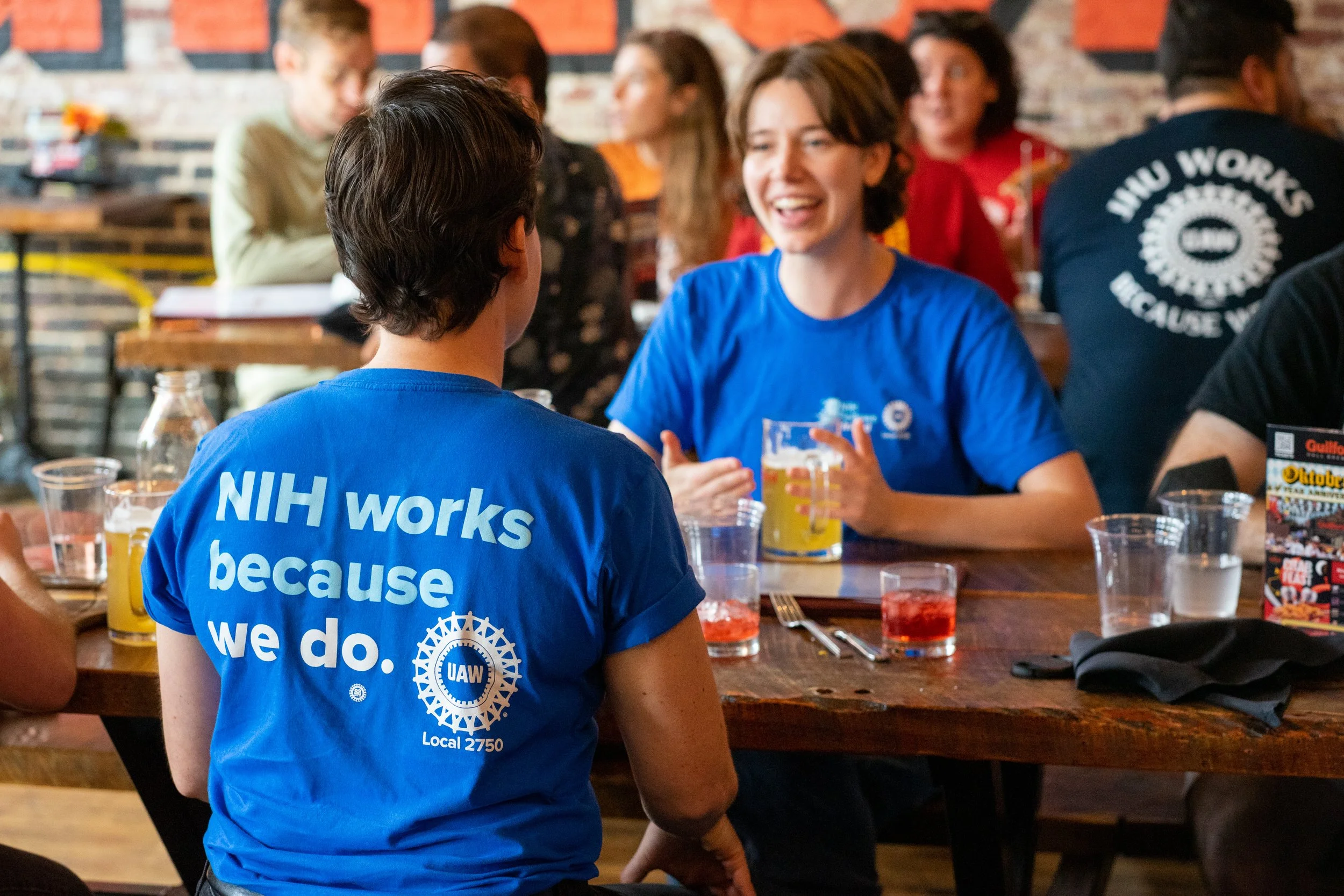
What committee members do
Simple things that make a union strong
Stay in touch
Check in with coworkers, hear what is going on in the lab, and make it easy for people to raise a question or concern early.
Share clear information
Help coworkers understand their rights, what our union is working on, and decisions or events that affect Fellows.
Make support reachable
When someone is having a hard time, help them reach the right union support and make sure they are not navigating it by themselves.
Plan what we do together
Help organize actions, events, and projects that defend our rights, bring more Fellows in, and grow our ability to act together.
How we work
A weekly place to coordinate and learn
-
1
Bring what you are hearing
Share questions, concerns, and ideas from your lab or area so the rest of us can understand what Fellows need.
-
2
Get the latest
Learn what is happening across the union and leave ready to explain it in clear, everyday language.
-
3
Rely on one another
Work through questions together, practice difficult conversations, and connect with people who have relevant experience.
-
4
Take the next small step
Follow up with a coworker, invite someone to an event, help with an action, or connect a lab that does not yet have a regular contact.
Who should join
You do not need a title—or all the answers
Join if coworkers already come to you, if you want your lab to be better connected, or if you want to help plan the work of our union. Experience is not required. Being willing to listen, follow up, and work with others is enough to begin.
Help build the network
Make sure every Fellow has someone
Come to a weekly meeting, bring a question from your lab, or help us connect with an area we have not reached yet. The more trusted coworkers who step in, the stronger and more responsive our union becomes.
Join the Organizing Committee